Should You Send Likes on Dating Apps?
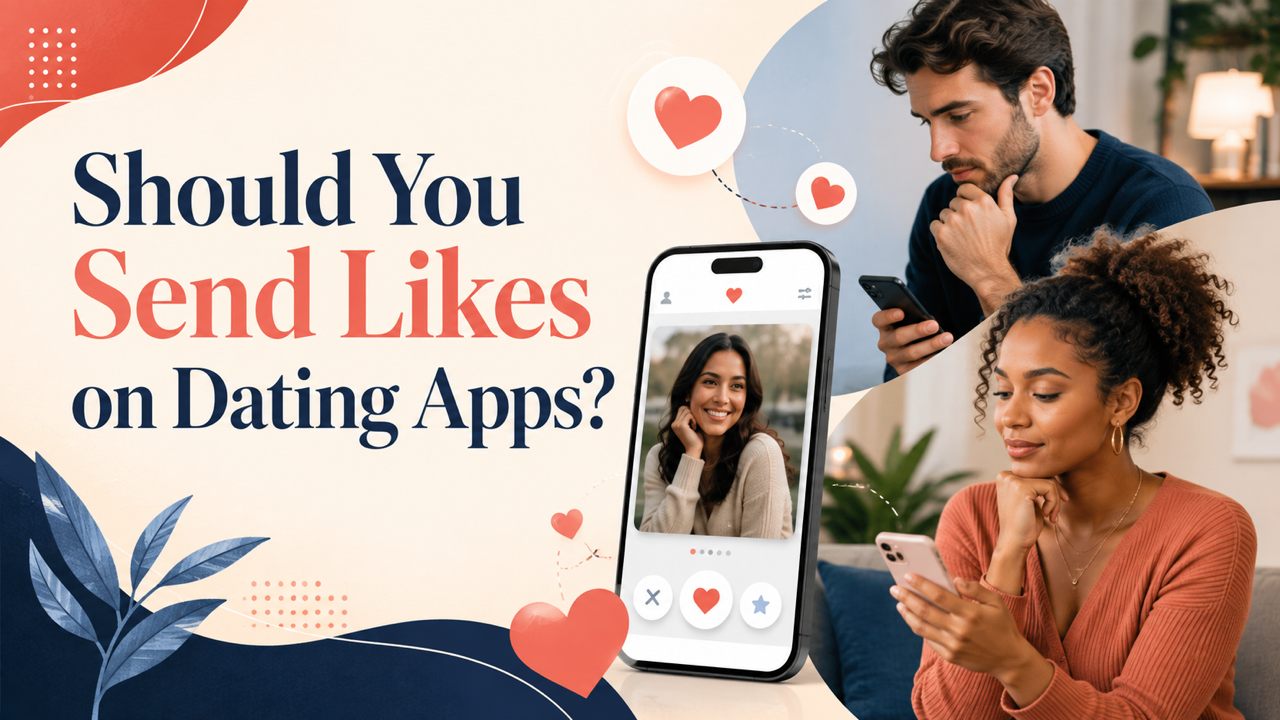
If waiting for incoming interest leaves you with few good options, then yes, you should send likes on dating apps. The mistake is treating every like as a lottery ticket. A useful like is a deliberate choice: you find someone compatible, give them a clear reason to notice you, and make it easy for them to respond. That approach gives you more control without turning dating into a nightly numbers grind.
Waiting and sending solve different problems
Incoming likes tell you who has already found your profile appealing. They remove one layer of uncertainty, so those matches can feel easier to start. The catch is that you cannot choose who enters that queue. If the people liking you rarely fit your preferences, waiting simply gives you a comfortable view of the wrong pool.
Sending likes does the opposite. You choose the profiles, but you accept a lower response rate because many recipients will not see you as a fit, may already be talking to someone, or may barely use the app. A declined or unanswered like is not proof that the action was pointless. It is the filtering process working in both directions.
The best strategy usually combines both routes. Make your profile strong enough to attract relevant incoming interest, then send selective likes to people you would genuinely want to meet. One route improves efficiency; the other expands your options.
Why your like can get ignored even when your profile is good
A dating app is not a clean marketplace where every profile receives equal attention. People open the app at different times, pause their accounts without deleting them, collect more likes than they can review, and make fast decisions based on mood. Your profile may appear next to several equally plausible options. Timing and attention affect the result.
This is why interpreting every non-match as a verdict on your attractiveness creates bad decisions. You may respond by sending hundreds of likes, rewriting your personality into bland approval bait, or quitting after a quiet week. None of those reactions tells you what actually needs improvement.
Judge patterns over a meaningful sample instead. If nearly every carefully chosen like goes nowhere for several weeks, inspect your photos, written prompts, filters, and location radius. If you match but conversations repeatedly stall, the issue is probably no longer the like. If chats are pleasant but nobody agrees to meet, look at how and when you suggest a date.
More likes do not automatically create more dates
Volume helps only while the profiles remain plausible matches. Once you start liking people you would not enthusiastically reply to, the numbers become misleading. You may produce more matches while also creating more conversations you do not want to continue.
Blanket liking has another cost: it trains you to evaluate profiles carelessly. You stop noticing incompatible goals, distance, family plans, lifestyle habits, or communication preferences. Then you spend time sorting those conflicts after matching, when a ten-second pause could have caught them earlier.
A smaller set of intentional likes is usually more sustainable. You can pay attention to the profile, recognize why you are interested, and start the conversation without inventing enthusiasm. Dating already contains enough ambiguity. Your own choices should not add more.
Decide who deserves a like before you tap
Attraction matters, but a photo alone rarely gives you enough information for a useful decision. Look for three kinds of fit:
- Practical fit: You live within a realistic distance, want compatible forms of dating, and can imagine schedules that overlap.
- Lifestyle fit: Their social habits, family plans, routines, and priorities do not create an obvious conflict with yours.
- Conversational fit: Their profile contains something you are curious about, amused by, or able to respond to naturally.
You do not need perfect certainty. A profile is only a small introduction. You do need one reason beyond appearance to believe a conversation could go somewhere. If you cannot find one, a match is likely to become another silent tile in your inbox.
Should you add a message to your like?
A short message can help when it gives the other person an easy opening. It cannot rescue basic incompatibility, and it should not read like a miniature application for someone who has not shown interest yet.
The useful middle ground is specific and light. Respond to a detail they chose to include, then leave room for an answer. If their profile shows a chaotic attempt at homemade pasta, ask whether dinner survived. If they mention a strong opinion about weekend trips, offer two nearby choices and ask which wins. The message should show that you looked, not that you spent twenty minutes composing it.
Avoid compliments that could sit under any profile. “Beautiful” may be sincere, but it gives the recipient nothing to work with. Avoid interviews too. Three questions in one opening can feel like homework. One relevant observation or question is enough.
When a plain like is perfectly fine
Send a plain like when the app makes comments awkward, the profile offers little to respond to, or your interest is already clear from the photo or prompt you selected. A forced joke is not more memorable than silence in a good way. If you match, you can start with a thoughtful message then.
Your profile has to do work while you are offline
If most of your dates begin with incoming likes, that is valuable information. Your profile is already capable of converting attention into interest. The next question is whether it attracts the people you want.
Start with the photos. Your first image should make your face easy to see, without sunglasses, distant framing, or a group that forces someone to identify you. The rest should answer simple questions: What does your life look like? How do you dress? What might spending a Saturday with you feel like? A series of nearly identical selfies cannot do all of that.
Written prompts should create handles for conversation. “I love travel, food, and fun” is agreeable but empty. A specific preference is more useful: the neighborhood restaurant you defend, the Sunday ritual you refuse to skip, or the minor opinion your friends always debate. Specificity gives the right person a place to enter.
Do not try to appeal to everyone. A profile that clearly shows your routines, priorities, and sense of humor may earn fewer total likes while producing better matches. That is a win if your real goal is a good date rather than a busy notification screen.
What to do when incoming likes are rarely your type
First, check whether your profile is broadcasting something you did not intend. A party photo as your lead image may attract a different crowd than a relaxed outdoor portrait. A joke about never leaving the house may push away active people even if it is exaggerated. Your profile is not only describing you; it is filtering the audience.
Next, review your settings. An overly broad age range or distance radius can fill your queue with technically eligible but impractical options. Filters that are too narrow create the opposite problem. Use firm filters for genuine deal breakers, then leave some space around preferences that could change once you meet a real person.
Finally, initiate with the people you do want. You cannot expect your preferred matches to discover you at exactly the same rate that unsuitable matches do. Sending a like is how you correct that imbalance.
Do not confuse a match with progress
A match only means that two profiles passed an initial screen. The quality of what happens next matters more than the total in your inbox. A healthy process moves through distinct steps:
- You choose a plausible match rather than liking on reflex.
- You start a conversation tied to something real in the profile.
- You notice whether curiosity and effort travel both ways.
- You suggest a simple date before the chat becomes a pen-pal routine.
- You evaluate the in-person connection without treating app chemistry as a promise.
If one stage repeatedly breaks, fix that stage. More likes will not repair a conversation style that feels generic. Better messages will not solve a profile that hides your face. A polished profile will not compensate for targeting people with incompatible goals.
Protect yourself from the numbers-game mindset
The phrase “numbers game” contains one useful truth: you need enough attempts to encounter mutual interest. It becomes harmful when it turns people into interchangeable opportunities and every rejection into a statistical irritation.
Set a small daily or weekly limit that keeps you attentive. Five considered likes can teach you more than fifty automatic ones because you can remember what you chose and observe the response. Stop when you become resentful, careless, or tempted to lower your standards just to produce activity.
Keep some of your social life off the apps as well. Friends, recurring classes, events, volunteering, and ordinary public life give you contact with people outside an algorithmic queue. This is not a punishment for poor app results. It is a way to prevent one product from controlling your entire sense of romantic possibility.
Run a two-week dating app experiment
For the next fourteen days, send a manageable number of likes only to people who meet your practical criteria and give you at least one honest conversation opening. Add a short message when the profile offers a natural hook. Do not track every rejection; track the points where your process succeeds or fails.
Record four numbers: likes sent, matches, conversations with reciprocal effort, and dates planned. Also note whether incoming likes fit your preferences any better after you improve your profile. These figures will not measure your worth. They will show whether your current photos, filters, targeting, and conversation habits work together.
At the end of the test, change one weak element rather than everything at once. Replace the lead photo if profile response is poor. Tighten your selection if matches feel wrong. Improve your openings if matches stay silent. Suggest a brief, low-pressure meeting sooner if good chats fade. Then repeat the test with the new version and let your own pattern guide the next adjustment.